Current Modelling for tomorrows Racing


A Project endorsed by the United Nations Decade of Ocean Science for Sustainable Development,
affiliated with UNESCO-CoastPredict: Observing and Predicting the Global Coastal Ocean


NOT A DROP OF DATA FOR INSHORE WATERS

The Future Science Vision of Subsea Observation System 

A new era of ocean science is starting, not on the horizon, but in the inshore waters that surround our coasts.  As the SubRacing Series starts to redefine subsea sport, our scientific sibling,  Subsea Observation Systems, will change the way that ocean specialists monitor, understand, and interact with the nearshore ocean environment. 

The dynamics of the offshore global oceans have been studied, sampled and modelled for decades, but these models rarely predict correctly the actual conditions in the coastal zones with inshore bays and shallow depths. However, to hold more complex submarine races in these areas the SubRacing Series aim to reinvest the results of the racing activities into a long-term scientific study of inshore waters to create digital twins which provide accurate oceanic data to the submarine pilots and coastal communities where any arena is located. 

Through Subsea Observation System, every racing arena will become a living laboratory: closely monitored, data-rich, and digitally mirrored. These nodes will not only support the sport but will serve as persistent environmental sentinels contributing to our high-resolution models which will provide communities with detailed inshore data.
VISION: ALWAYS-ON OCEAN INTELLIGENCE

We will work with local partners to develop digital twins for our racing sites by deploying long-term, real-time data acquisition systems in each future SubRacing Series race arena. These systems will feed unique models which will transform racing sites into smart marine observatories, generating public forecasts of oceanographic, physical, and ecological data. 

They will also serve as ‘learning platforms’ where young digital engineers and scientists can work with these digital twins to learn the skills and integrations required to produce large scale digital models. 

Over time, Subsea Observation System will connect these arena-based nodes into a global network. Together, they will feed high-resolution, real-time data into the creation of a Digital Twin of the Nearshore Ocean—a powerful simulation platform that will drive innovation in engineering, ecosystem management, climate science, and beyond.

CREATING AN INSHORE DIGITAL TWIN

Gemelo logo colour tspt650px

BUILDING THE PROJECT GEMELO INSHORE DIGITAL TWIN

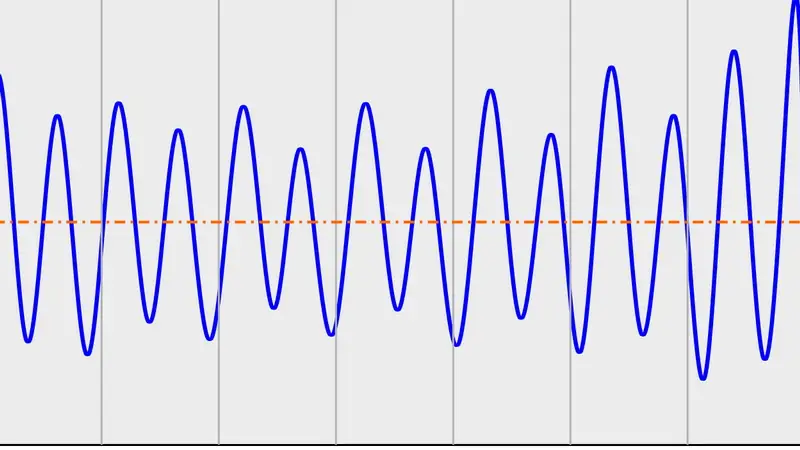
Our ambition is to generate a living, learning digital model of the coastal ocean in our racing arenas, which is fed by sensor arrays that track critical factors such as water temperature and viscocity and current velocities to evaluate racing options and ecosystem health. 

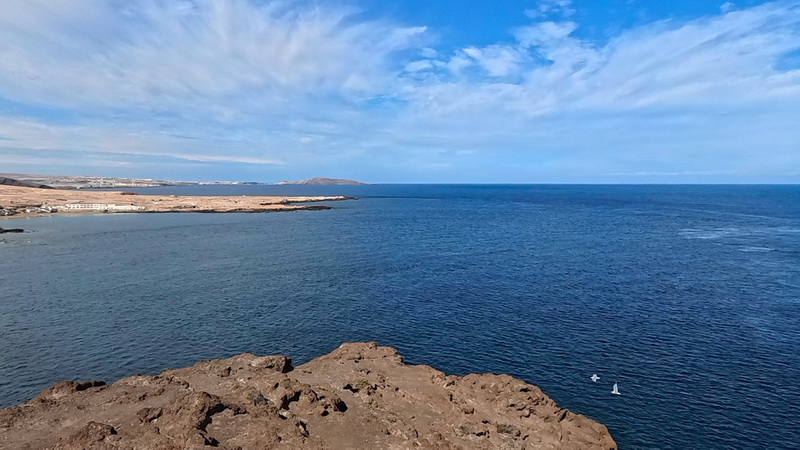
Our first model is ‘Project Gemelo‘ in the Bahia de Arinaga in the Canary Islands, and this virtual model will: 

  • Validate and refine oceanographic and climate models for inshore areas. 
  • Help us design racing infrastructure in shallow litorals. 
  • Provide pilots with real-time race conditions for the SubRacing races. 
  • Help create models for virtual testing of subsea craft and sensors. 
  • Display this data on dashboards and educational tools during races. 
  • Support local conservation and planning with averaged current models. 


By embedding measurement into the fabric of the racing experience, we will ensure our submarine races and events also become moments of scientific progress. 

Project GEMELO will contribute to Challenge 8 of the UN Ocean Decade Project.


THE TECH STACK OF OBSERVATION

Each Submarine Racing Arena will be surveyed with advanced instrumentation so that our pilots can use the detailed information to plan their dives. 

We will start by using Multibeam sonar to understand the seafloor bathymetry, in some cases supported by Sidescan sonar for sediment and habitat mapping or Sub-bottom profilers to measure sediment structure. 

Detailed real-time information will come from ADCPs (Acoustic Doppler Current Profilers) and turbidity sondes to capture currents and water quality, when added to real-time Meteorological sensors for wind, precipitation, and atmospheric pressure, our pilots will have all the data they need to plan their races.

Subsea Observation System will leverage both autonomous platforms (such as USVs) and vessel-based systems, enabling agile deployment and scalable expansion. These technologies will be designed to run continuously, with minimal intervention and maximum interoperability. 

MONITORING THE LIVING OCEAN

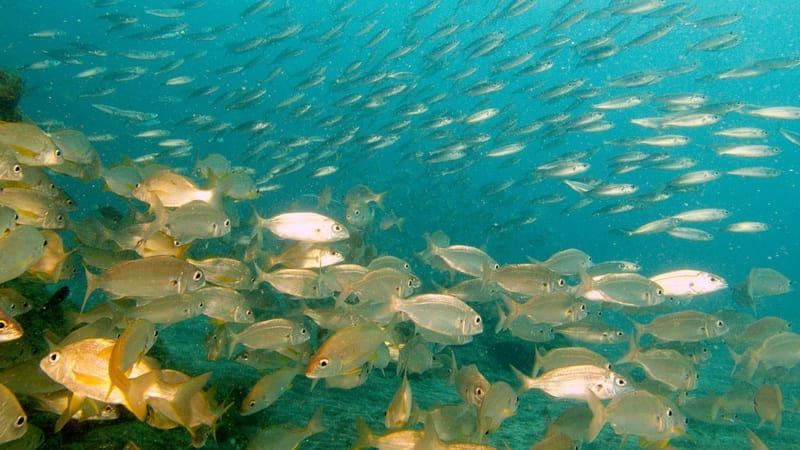
Beyond physics and chemistry, Subsea Observation System will shine a spotlight on marine life. Through optical, acoustic, and satellite-based tools, Subsea Observation System want to map and monitor key ecological features such as: 

  • Seagrass beds: critical for biodiversity and carbon storage. 
  • Kelp forests and mangroves: dynamic buffers against erosion and climate change. 
  • Phytoplankton and algae: indicators of productivity and water quality. 
  • Coral reefs and benthic habitats: foundational to ecosystem resilience. 
  • Avian and marine fauna: vital components of coastal food webs. 

These observations will be used to guide habitat restoration, monitor species health, and inform ecosystem services valuation. 

DRIVING THE FUTURE BLUE ECONOMY

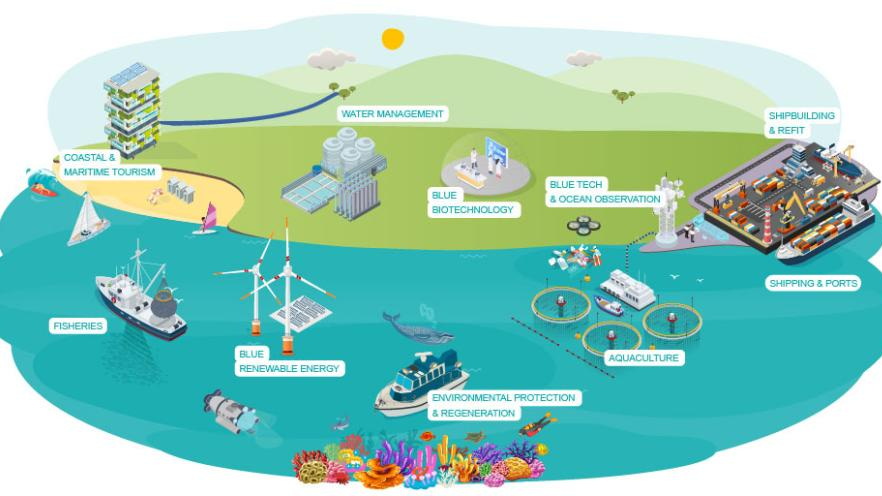
As the global economy increasingly turns to the sea, Subsea Observation System will provide the foundational data to ensure that growth is sustainable and evidence based. Key sectors that will benefit include: 

  • Fisheries and aquaculture: real-time monitoring will enhance yield and sustainability. 
  • Tourism and recreation: clean, healthy, and understood waters will attract eco-tourism. 
  • Renewable energy: precise site data will support offshore wind and tidal power. 
  • Maritime logistics: navigational safety and port operations will improve with real-time data. 
  • Biotech and pharma: ecological insights will support innovation and discovery. 

By enabling smarter ocean use, the models developed will underpin a thriving nearshore Blue Economy—while safeguarding the ecosystems it depends on. 

A COMMITMENT TO SUSTAINABILITY

Subsea Observation System will embed sustainability into every layer of its operation: 

  • Environmental: low-impact infrastructure, biodegradable materials, and restoration programs (e.g. seagrass planting, artificial reef support). 
  • Social: engagement with local communities, citizen science initiatives, and educational platforms. 
  • Economic: enabling local businesses, driving tourism, and attracting sponsorships rooted in ocean stewardship. 

By design, our models will be a visible and credible tool for ocean conservation—transforming public engagement from passive awareness to active stewardship. 

FROM LOCAL ARENAS TO A GLOBAL OCEAN MODEL

Every Subsea Observation System arena will be chosen for its scientific, ecological, and cultural value. By anchoring observatories in diverse coastal settings—ranging from the rugged Atlantic to the biodiverse tropics—these models will capture the true variability of nearshore ecosystems. 

These arenas will not only support SubRacing Series competition but will become local hubs of innovation: training grounds for ocean engineers, testing sites for new tech, and platforms for international collaboration. 

Subsea Observation System will align with the UN Ocean Decade Goals (specifically Challenges 8, 9, and 10), and seek formal recognition as a Decade Action, positioning it as a flagship contributor to global ocean health. 

THE RACE TO OBSERVE IS JUST BEGINNING

In the near future, the SubRacing Series won’t just thrill spectators—it will energize a new generation of ocean science. Subsea Observation System will be the invisible engine beneath the race: a network of subsea observatories, digital twins, and real-time data flows that will transform our relationship with the sea. 

Through this initiative, the inshore ocean will no longer be a blind spot in global science. It will become a high-resolution, continuously monitored system—open, accessible, and understood. 

This is more than a race. This is a scientific moonshot—beneath the waves. 

Request more information

Contact the Project GEMELO team with your questions.